TL;DR
Anthropic is not just competing in the “LLM performance race.”
From a CRM / marketing automation operations perspective, what makes Anthropic (Claude) truly relevant is:
- Safety-first design that is ready for real operations (governance-aware by default)
- An AI that can coexist with human approval workflows
- Support not only for generating optimization ideas, but also for improving operational understanding and documentation
In complex environments like Salesforce Marketing Cloud (SFMC)—where systems are easy to overgrow, become overly dependent on tribal knowledge, and trigger human errors—the real value is not simply “being smart,” but being stable and repeatable.
Why Anthropic Matters in CRM (Not Just “Writing Better Emails”)
CRM is not fundamentally about generating copy.
The real value comes from operational decision-making, such as:
- Who to send to, when, and what (segmentation and timing)
- What KPI to optimize (CV, revenue, LTV, churn, complaint rate, etc.)
- How far personalization can go (precision vs. risk)
- How to control message volume (fatigue, unsubscribes, spam complaints)
- How to balance automation speed with maintainability
CRM is always a constrained optimization problem.
We want to maximize impact
But we can’t afford incidents
But we can’t increase manual workload
But we can’t slow execution down
If we inject AI into this environment, “smart” is not enough.
What we need is an AI that is less likely to cause incidents, operationally durable, and reproducible.
The Biggest Enemy of SFMC Ops: Complexity and Tribal Knowledge
SFMC is a powerful platform, but as operations scale, operational debt grows.
- Automation Studio workflows multiply
- Activity dependencies become invisible
- Data Extensions (DEs) explode in number
- SQL becomes tribal knowledge
- Root-cause analysis becomes harder when errors happen
One of the biggest challenges is onboarding new team members.
Real Operational Pain: Newcomers Struggle Because They Can’t See “Connections”
In my experience, the patterns are highly consistent:
Newcomers to SFMC tend to get stuck on the same points.
What newcomers fail to understand
- Why a specific Data Extension exists in the first place
- Which automation creates which DE, and which campaigns consume it
- Which activities are upstream vs downstream
- When data is refreshed and where it is referenced
SFMC is not a platform where “you can understand everything by looking at the UI.”
The full picture is often only visible to the people who already carry it in their head.
As a result, newcomers often end up in this loop:
- getting stuck on local errors,
- not knowing where to look first,
- becoming dependent on experienced members,
- discovering mistakes too late.
Seniors Also Suffer: Reviews Are Visual, Slow, and Error-Prone
When newcomers ask for help, it is not easy on the senior side either.
In practice, review work becomes something like:
- open the SFMC screens
- trace the automation flow
- open the DEs
- validate record counts and timing
- check SQL and extract logic
- guess where the most likely root cause is
This takes real time.
And because it relies heavily on manual, visual checking, the environment is naturally prone to human error.
In other words, SFMC operations are not only:
- a job to drive performance,
- but also a job to manage complexity.
Where AI Actually Helps: Not Only Optimization, but Understanding + Documentation
Most AI adoption discussions stop at “campaign ideas” or “copy generation.”
But in SFMC, another value is often more impactful:
- operational understanding
- documentation generation
Documentation is not a “nice-to-have”—it is a safety mechanism
In SFMC, weak documentation is a direct path to operational failure:
- requirements become unclear
- dependencies cannot be traced
- handovers collapse
- changes become risky, so people stop touching workflows
- the system becomes a black box
Documentation is not just a deliverable.
It is a safety mechanism.
AI Makes Knowledge Access More Equal Across the Team
Another key impact is reducing internal information asymmetry.
Traditionally, operations often depend on:
- the people who “know the system”
- the ones who have been involved the longest
- the few experts who carry the real operational truth
And if those experts leave, the system breaks.
But with AI, the situation changes.
If the AI can read and structure:
- requirement docs
- SQL logic
- screenshots or logs
- incident history
- workflow diagrams
- past change notes
then even newcomers can reach the question:
“What should I check first?”
In other words:
Input sources become equally accessible to everyone.
And that is powerful in operations.
Why Anthropic (Claude) Fits SFMC Ops Work Well
Anthropic’s value is not just “safety as a slogan.”
It aligns with how CRM / MA operations actually work.
1) Designed as an AI that can be embedded into work
CRM operations do not require vague conversations.
They require:
- conditional logic
- explicit restrictions
- exception handling
- approval flows
- audit-ready outputs
If you allow a model to freely generate content without boundaries, you will eventually face incidents.
Anthropic’s design philosophy (safety, control, consistency) fits this environment.
2) Works best inside human approval workflows
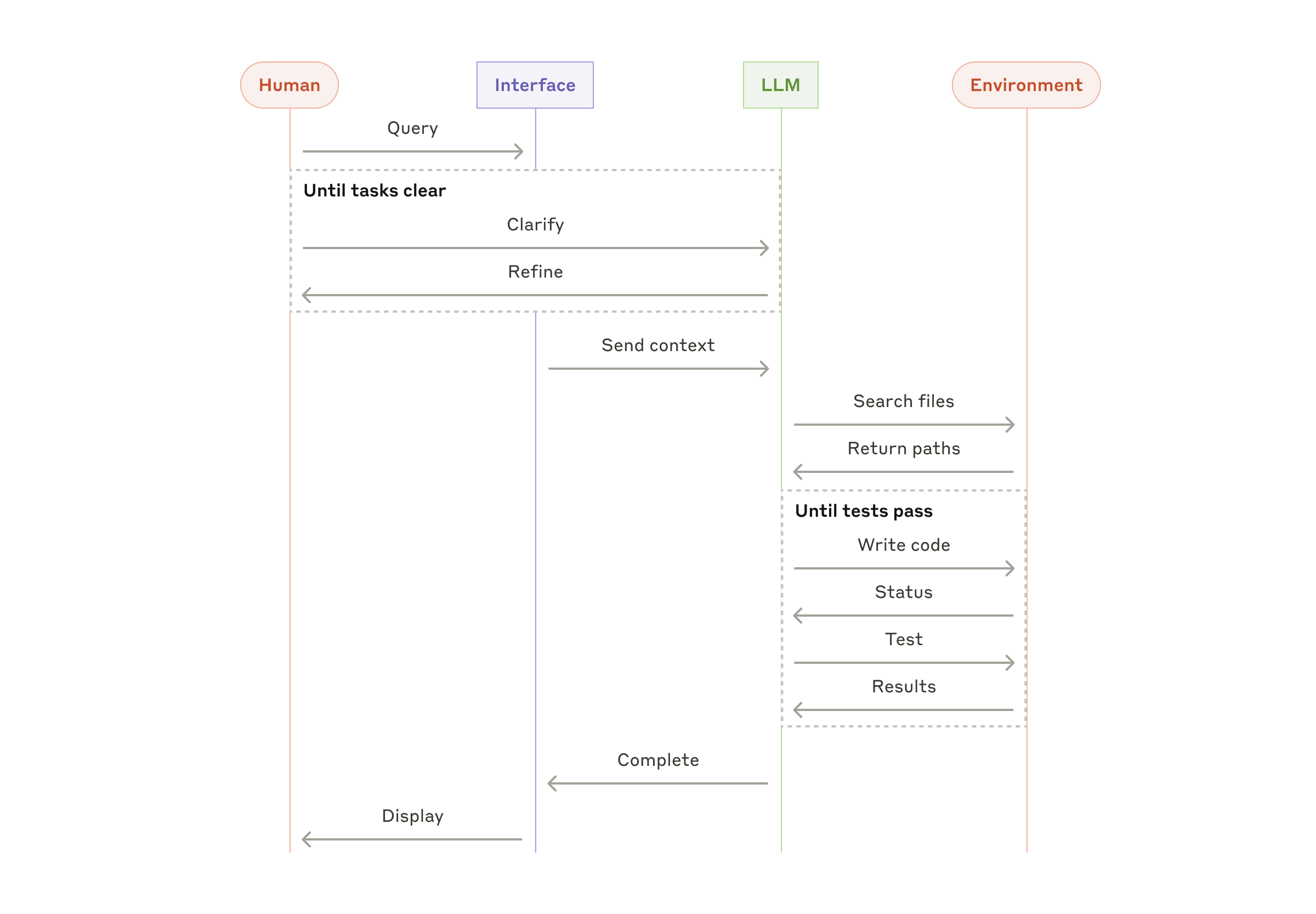
The best approach is not “fully autonomous execution.”
A realistic operating model is:
AI proposes → humans approve → execution happens
Claude naturally fits as an “operations co-pilot,” not an uncontrollable agent.
3) Strong for long and complex operational context
SFMC requires reading and structuring large volumes of context:
- requirement definitions
- journey design
- data specifications
- SQL
- operational rules
- incident history
An AI that can reliably digest and summarize that context directly reduces operational cost.
Can SFMC Tuning Be Automated? (The Core Question)
My conclusion: yes, a large portion of SFMC operational tuning can be automated.
Because tuning is essentially:
observe → detect anomalies → select actions → execute
Once you decompose what humans do, many parts can be structured.
A Practical Framework: Levels of SFMC Automation
Level 1: Task Automation (already possible)
- scheduled data extraction
- data transformation (SQL / scripts)
- performance aggregation
- error detection + alerting (Slack/email)
This is already achievable with tools like GAS, Python, or cloud jobs.
Level 2: Monitoring + Decision Support (where AI shines)
Examples:
- CVR drops suddenly → list plausible root causes
- unsubscribe rate increases → isolate drivers (volume, subject, offer, segmentation)
- segment size changes → suspect upstream DE refresh issues
Here, AI is not expected to “decide the truth.”
The value is producing a prioritized debugging checklist.
Level 3: Improvement Suggestion Generation (highest ROI)
- frequency cap adjustment proposals
- send-time optimization hypotheses
- subject line / preheader suggestions (with strict rules)
- recommendation slot allocation to reduce exposure bias
- experiment design (A/B, holdout, incremental lift)
But the key is to avoid direct auto-application.
The safest model is:
propose → approve → apply
Level 4: Semi-Autonomous Operations (possible under constraints)
Examples:
- automatically reduce volume when complaint rate rises
- restore from backup if a DE is missing
- switch to fallback workflows when automation fails
Because responsibility and impact are large here, most companies should start from Level 2–3.
How AI Changes CRM Work (My Perspective)
I do not believe CRM work will disappear.
But the location of value will shift.
Work that will shrink
- manual reporting
- aggregation work
- simple A/B testing routines
- FAQ-type support
- “running campaigns without a real feedback loop”
Work that will become more important
- KPI definition (what does “winning” mean?)
- constraint design (what must never happen?)
- data model integrity (trustworthy logs)
- governance and audit workflows
- final decision-making responsibility
CRM becomes more like decision system design.
Conclusion: Anthropic Can Be a “Practical Answer” for CRM Operations
Anthropic’s true value is not a safety label, but a real operational stance:
- designed under the assumption that incidents will happen unless controlled
- building AI that is durable enough for real-world operations
- enabling realistic coexistence with human approval and governance
In complex platforms like SFMC, what matters is not only optimization, but:
- continuous improvement
- incident prevention
- operational understanding
- documentation and transferability
With AI, SFMC tuning shifts from an “artisan skill” into:
a structured system of observe → hypothesize → experiment → improve
And I strongly believe Anthropic can become a key player in this future.
Next Step: What I Would Build First
If I were to build an “SFMC Operations AI,” I would start here:
- unify delivery + outcome logs (Send/Open/Click/CV/Unsub/Complaints)
- implement anomaly detection rules (drops/spikes/segment size shifts)
- use Claude to generate root-cause hypotheses + a prioritized checklist
- template improvement actions (frequency cap / segmentation / subject / timing)
- apply changes only after human approval (avoid full autonomy)
- automate documentation generation to reduce tribal knowledge
CRM is a battlefield of optimization, so AI will fit.
But if implemented carelessly, it will backfire.
That is exactly why Anthropic’s philosophy matters.